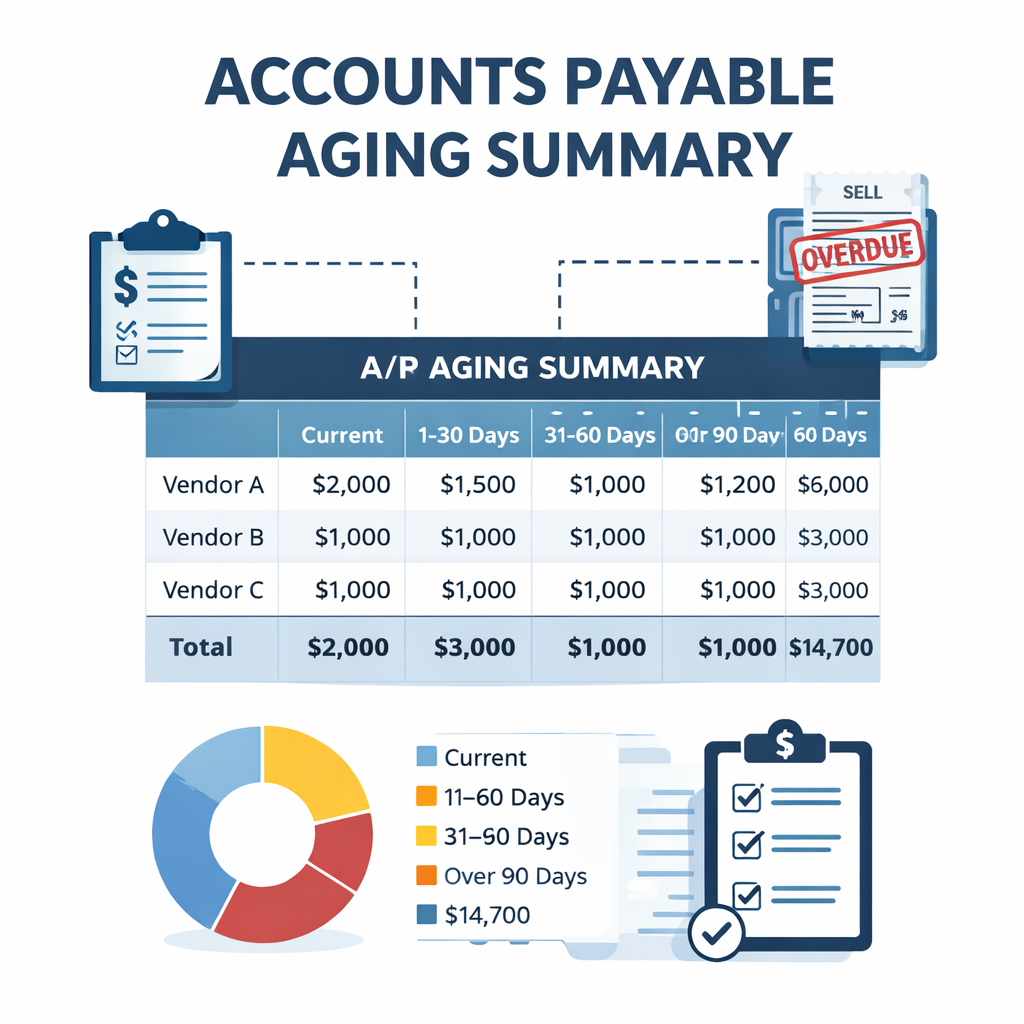
The Accounts Payable (A/P) Aging Summary is a vital financial report that shows how long a business’s unpaid vendor bills have been outstanding. By categorizing payables based on age, this report helps businesses manage cash outflows, maintain strong vendor relationships, and plan payments effectively. It is an essential tool for cash management and financial control.
1. Purpose of the A/P Aging Summary
The primary purpose of the accounts payable aging summary is to provide visibility into outstanding obligations. Rather than listing only total payables, it highlights when payments are due or overdue, allowing businesses to prioritize payments and avoid late fees or service disruptions.
2. Aging Categories
Payables are grouped into aging buckets, typically:
-
Current (not yet due)
-
1–30 days past due
-
31–60 days past due
-
61–90 days past due
-
Over 90 days past due
These categories help identify which bills require immediate attention and which can be scheduled for future payment.
3. Vendor-Level Detail
The report usually lists balances by vendor, showing:
-
Total amount owed
-
Outstanding amounts in each aging category
This detail supports better vendor communication and helps resolve disputes or billing discrepancies quickly.
4. Cash Flow Management
The A/P aging summary plays a key role in managing cash flow. By reviewing upcoming and overdue payments, businesses can:
-
Plan short-term cash needs
-
Optimize payment timing
-
Balance liquidity with vendor obligations
Proper use of this report helps avoid cash shortages while ensuring critical vendors are paid on time.
5. Vendor Relationship Management
Consistently monitoring accounts payable aging helps maintain strong supplier relationships. Timely payments build trust, may improve credit terms, and reduce the risk of supply interruptions. Chronic overdue balances can damage vendor confidence and lead to stricter payment terms.
6. Internal Controls and Accuracy
Regular review of the A/P aging summary helps detect:
-
Duplicate or incorrect invoices
-
Unauthorized charges
-
Posting errors
Strong controls over accounts payable reduce the risk of fraud and ensure liabilities are accurately reported.
7. Reconciliation with the General Ledger
The total balance shown on the accounts payable aging summary should match the accounts payable balance in the general ledger. Reconciling these reports ensures:
-
Complete and accurate vendor records
-
Reliable financial statements
-
Early identification of discrepancies
8. Use in Financial Planning and Analysis
The A/P aging summary supports broader financial analysis by helping management:
-
Forecast cash disbursements
-
Evaluate payment practices
-
Identify opportunities to take advantage of early payment discounts
It also provides insight into short-term liabilities for lenders and stakeholders.
9. Compliance and Audit Support
Auditors often review the A/P aging summary to verify completeness of liabilities and proper cutoff of expenses. A well-maintained aging report supports audit readiness and compliance with accounting standards.
Conclusion
The Accounts Payable Aging Summary is a powerful tool for controlling cash outflows and managing vendor obligations. By organizing payables by age, it enables better payment planning, strengthens supplier relationships, and ensures accurate financial reporting. Regular review of this report helps businesses maintain financial stability and operational efficiency. At Charted Legacy Solutions, we are trained to interpret and provide valuable insight into all your financial statements. Contact Us to find out how we can help you understand them so that it will be easier to grow your business.