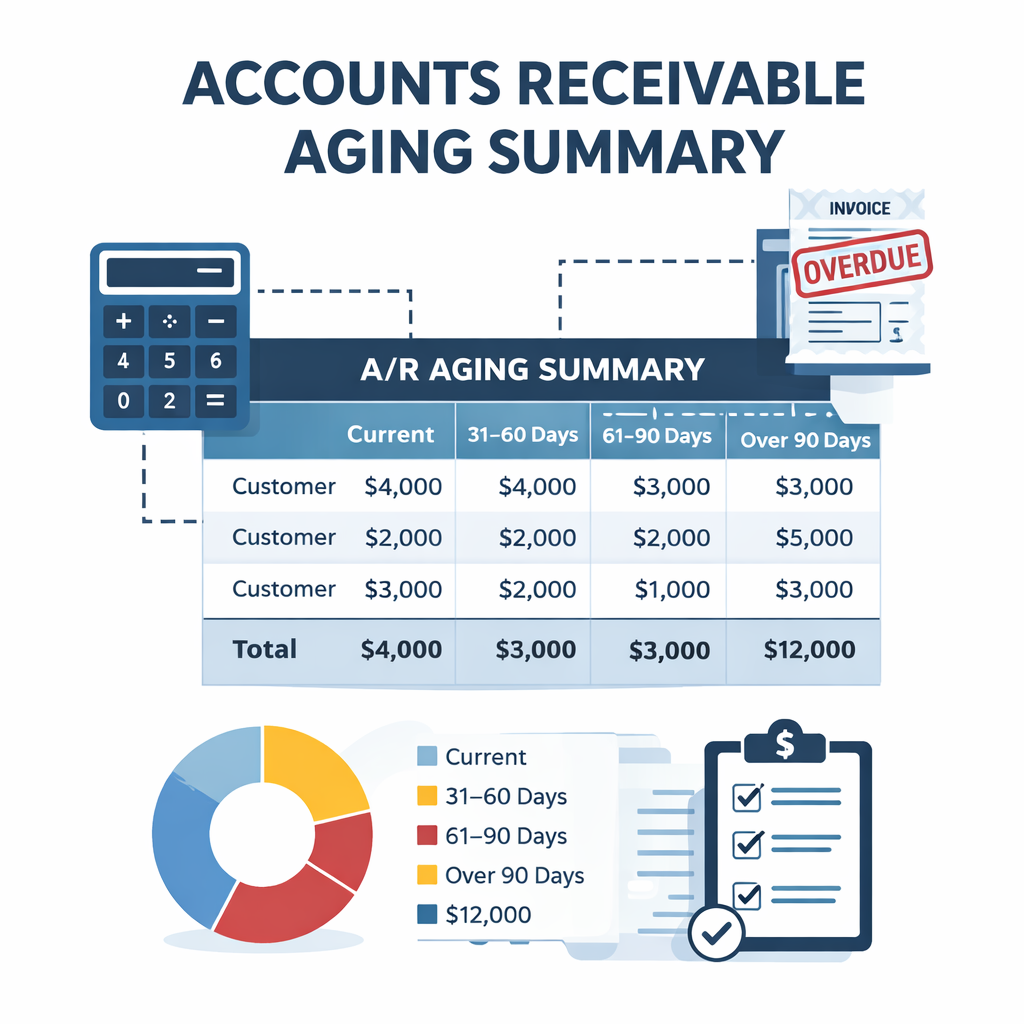
The Accounts Receivable (A/R) Aging Summary is a critical financial report that shows how long customer invoices have been outstanding. By organizing receivables based on age, this report helps businesses manage cash flow, assess credit risk, and prioritize collection efforts. It is an essential tool for maintaining healthy working capital and reducing bad debt.
1. Purpose of the A/R Aging Summary
The primary purpose of the A/R aging summary is to highlight unpaid customer balances and how long they have been overdue. Rather than simply showing total receivables, it provides insight into timing, which is crucial for cash flow management and collection planning.
2. Aging Categories
Receivables are grouped into time-based buckets, commonly:
-
Current (0–30 days)
-
31–60 days
-
61–90 days
-
Over 90 days
These categories help identify which customers are paying on time and which balances require immediate attention.
3. Customer-Level Detail
The report typically lists balances by customer, showing:
-
Total amount owed
-
Amount outstanding in each aging category
This level of detail allows businesses to target specific accounts for follow-up rather than relying on broad collection strategies.
4. Impact on Cash Flow
The aging summary directly affects cash flow forecasting. A higher concentration of balances in older aging buckets may signal:
-
Potential cash shortages
-
Ineffective credit policies
-
Collection process issues
Timely analysis supports more accurate planning and liquidity management.
5. Credit Risk Assessment
Older receivables carry a higher risk of nonpayment. The A/R aging summary helps management:
-
Identify high-risk customers
-
Adjust credit limits or terms
-
Decide when to escalate collections
It is also a key reference for lenders and auditors evaluating receivable quality.
6. Allowance for Doubtful Accounts
The aging summary is often used to estimate the allowance for doubtful accounts. Businesses apply different reserve percentages to each aging bucket to reflect increasing risk as invoices age, ensuring financial statements present a realistic view of receivables.
7. Reconciliation with the General Ledger
The total of the A/R aging summary should reconcile with the accounts receivable balance in the general ledger. Regular reconciliation ensures:
-
Accuracy of customer records
-
Detection of posting or billing errors
-
Reliable financial reporting
8. Collection Prioritization
By clearly showing which invoices are overdue and by how long, the aging summary allows businesses to:
-
Prioritize follow-up on older balances
-
Improve collection efficiency
-
Reduce days sales outstanding (DSO)
9. Management and Performance Metrics
The report supports key performance metrics such as:
-
Days Sales Outstanding (DSO)
-
Percentage of overdue receivables
-
Collection effectiveness
Tracking these metrics over time helps measure the success of credit and collection policies.
Conclusion
The Accounts Receivable Aging Summary is more than a list of unpaid invoices—it is a powerful management tool. By revealing the age, risk, and collectability of receivables, it supports better cash flow management, stronger customer credit decisions, and more accurate financial reporting. Regular review of this report helps businesses maintain financial stability and reduce exposure to bad debt. At Charted Legacy Solutions, we are trained to interpret and provide valuable insight into all your financial statements. Contact Us to find out how we can help you understand them so that it will be easier to grow your business.