The general ledger (GL) is the backbone of a company’s accounting system. It serves as the central repository where all financial transactions are recorded, categorized, and summarized. Every major financial statement—including the income statement, balance sheet, and statement of cash flows—draws its information directly from the general ledger. Understanding its key components is essential for maintaining accurate financial records and ensuring reliable reporting.
1. Central Record of Financial Transactions
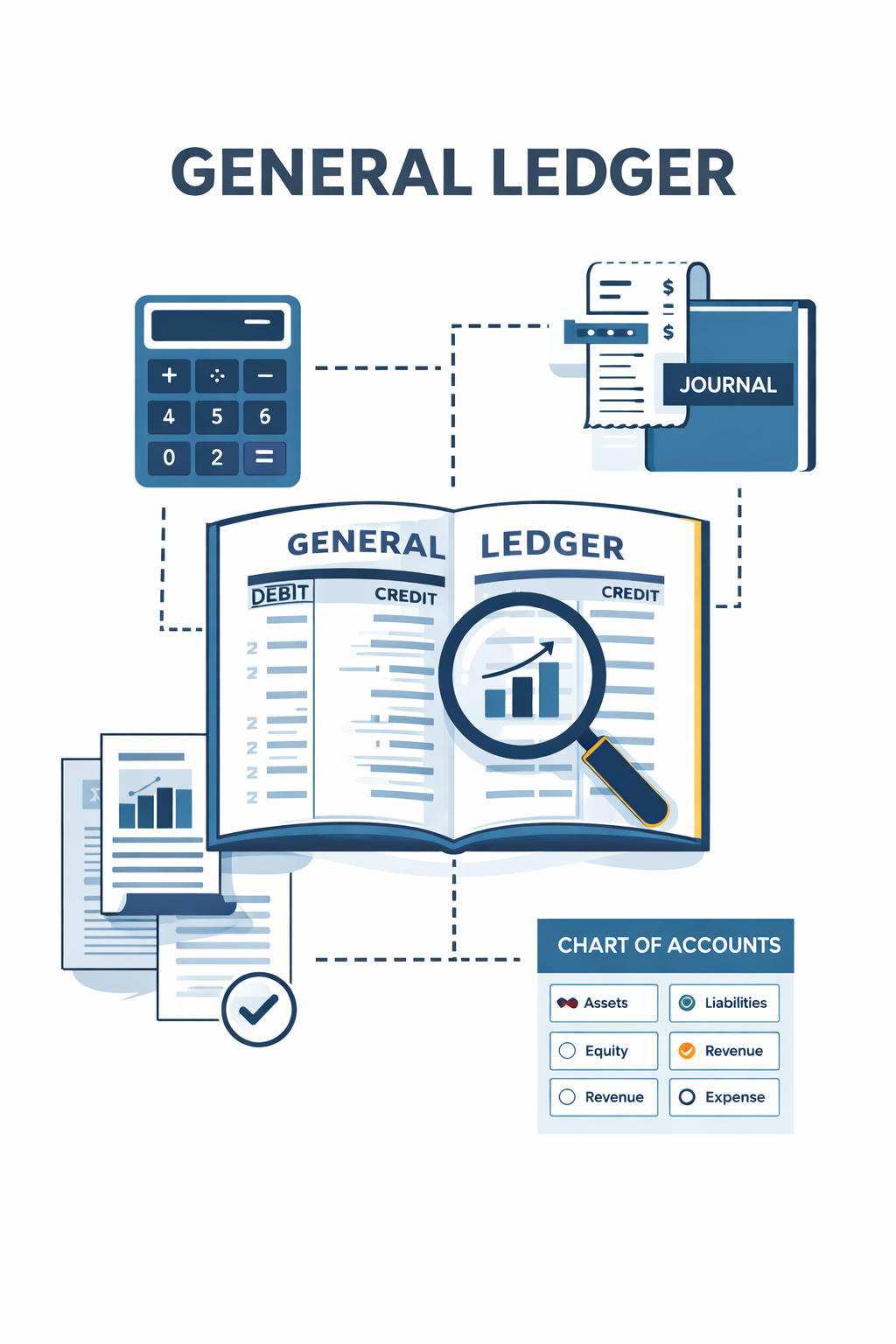
The general ledger consolidates all transactions recorded throughout the accounting system. Entries flow into the GL from journals such as:
-
Sales and revenue journals
-
Purchase and expense journals
-
Payroll records
-
Cash receipts and disbursements
This centralization ensures consistency and completeness across all financial data.
2. Chart of Accounts Structure
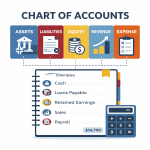
The general ledger is organized using a chart of accounts, which categorizes transactions into standardized account types:
-
Assets
-
Liabilities
-
Equity
-
Revenue
-
Expenses
Each account in the chart has a unique number and description, allowing transactions to be easily tracked, analyzed, and reported.
3. Double-Entry Accounting System
The general ledger operates under double-entry accounting, meaning every transaction affects at least two accounts:
-
One account is debited
-
One account is credited
This system maintains the fundamental accounting equation:
Assets = Liabilities + Equity,
helping ensure accuracy and balance within the ledger.
4. Account Balances and Posting
Each GL account maintains a running balance that reflects all debits and credits posted to it. Proper posting is critical because:
-
Errors at the GL level affect all financial statements
-
Account balances provide real-time insight into financial position
Regular posting and review help detect discrepancies early.
5. Trial Balance Preparation
A trial balance is prepared directly from the general ledger to verify that total debits equal total credits. While it doesn’t guarantee the absence of errors, it is a key step in identifying:
-
Posting mistakes
-
Mathematical errors
-
Omitted or duplicated entries
6. Adjusting Entries
At the end of an accounting period, adjusting entries are recorded in the general ledger to ensure revenues and expenses are recognized in the proper period. Common adjustments include:
-
Accrued expenses
-
Accrued revenues
-
Depreciation
-
Prepaid expenses
These entries are essential for compliance with accrual accounting principles.
7. Basis for Financial Statements
All financial statements are generated from the general ledger:
-
Income Statement: Uses revenue and expense accounts
-
Balance Sheet: Uses asset, liability, and equity accounts
-
Cash Flow Statement: Derived from changes in GL accounts
The accuracy of these statements depends entirely on the integrity of the GL.
8. Internal Controls and Audit Trail
The general ledger provides a detailed audit trail, allowing transactions to be traced back to their source documents. Strong internal controls within the GL help:
-
Prevent fraud
-
Ensure compliance with accounting standards
-
Support internal and external audits
9. Financial Analysis and Decision-Making
Beyond compliance, the general ledger is a powerful management tool. Detailed account data allows business owners and managers to:
-
Analyze spending patterns
-
Monitor profitability
-
Track asset usage
-
Improve budgeting and forecasting
Conclusion
The general ledger is the foundation of accurate financial reporting and effective financial management. By organizing transactions, enforcing double-entry accounting, and supporting financial statements and analysis, the general ledger ensures that a business’s financial data is reliable, transparent, and useful for decision-making. At Charted Legacy Solutions, we are trained to interpret and provide valuable insight into all your financial statements. Contact Us to find out how we can help you understand them so that it will be easier to grow your business.